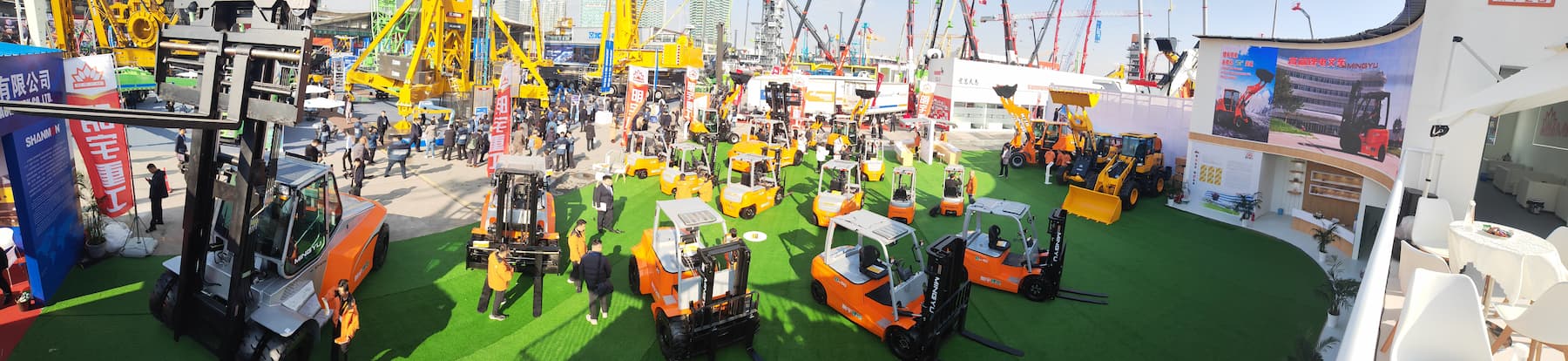
How to maintain the electric forklifts, wheel loaders, excavators
December 01, 2025Maintenance of electric forklifts, wheel loaders, excavators
The core of electric forklifts, wheel loaders, and excavators maintenance lies in battery management, motor maintenance, and hydraulic system care. Combined with daily inspections and regular in-depth maintenance, it can extend equipment service life and ensure operational safety. The specific key points are as follows:
I. Daily Maintenance (Before/After Each Shift/Day)
1. Battery System: Inspect the battery for no damage or leakage, and ensure the voltage is within the normal range (refer to the equipment manual); clean the battery terminals to avoid dust and oil accumulation causing poor contact; keep the charging interface dry and clean, and ensure good ventilation during charging.
2. Motor & Electronic Control: Observe the motor for no abnormal noise or overheating during operation; check that the electronic control box is well-sealed with no water or dust ingress; confirm that the wiring harness connections are firm without loosening or wear.
3. Hydraulic System: Check that the hydraulic oil level is within the specified scale and the oil quality is clear without impurities; inspect hydraulic pipelines and joints for no leakage; clean the hydraulic oil tank vent.
4. Travel & Braking: Check that the tire pressure is sufficient, wear is uniform, and there are no punctures; test the braking system for sensitivity and effectiveness, and ensure the brake fluid level is normal; clean oil and dust from the brake discs/drums.
II. Regular Maintenance (By Equipment Operating Hours/Cycle)
1. Battery In-depth Maintenance: Perform balanced charging once every 3-6 months to avoid battery cell voltage imbalance; test the battery capacity annually, and perform timely maintenance or replacement if the attenuation exceeds 20%; when idle for a long time, supplement charging to 50%-70% monthly.
2. Motor & Electronic Control Overhaul: Inspect the motor bearing lubrication every 1000 hours and add special grease as needed; test the electronic control system software version every 2000 hours and update the optimization program; regularly clean the motor radiator to ensure heat dissipation effect.
3. Hydraulic System Maintenance: Replace the hydraulic oil filter every 500 hours and the hydraulic oil (select the model specified by the equipment) every 2000 hours; inspect the operation status of the hydraulic pump and motor, and replace aging seals in a timely manner.
4. Other Key Components: Inspect the steering system tie rods and ball joints every 1000 hours, and tighten loose bolts; replace the brake fluid every 1500 hours, check the brake shoe wear, and replace if worn excessively; regularly clean the air filter and replace if severely clogged.
III. Maintenance in Special Scenarios
• High-temperature Environment: Avoid prolonged exposure of the battery to direct sunlight, and stop the machine for proper heat dissipation during operation intervals; shorten the hydraulic oil replacement cycle.
• Low-temperature Environment: Preheat the battery to above 5℃ before charging to avoid battery damage due to low-temperature charging; select hydraulic oil and grease suitable for low temperatures.
• Long-term Idle: Park in a dry and ventilated place, and disconnect the main battery switch; start the equipment for no-load operation for 10-15 minutes monthly to check the status of each system.
 Sign Up To Our Newsletters
Tel / Whatsapp : +86 592 7828123
Email : market@xmmingyu.com






© 2026 Xiamen MINGYU New energy Co.Ltd. All Rights Reserved.